
Introduction: The Birth of a Digital Battlefield
In the twenty-first century, an unexpected revolution emerged—not from battlefields or boardrooms, but from bedrooms, cafes, and glowing monitors. Esports, or electronic sports, have transformed from a hobby into a high-stakes global industry. Once seen as a subculture of gamers, esports today captivate millions of spectators, generate billions of dollars in revenue, and produce world-renowned athletes. This transformation is more than just digital competition; it’s a cultural shift, a technological marvel, and a social phenomenon.
Esports are not merely about playing games. They represent a complete ecosystem involving teams, sponsors, production houses, broadcasting rights, merchandise, training centers, and fan engagement strategies. As we delve into the evolution, structure, and impact of esports, it becomes clear why this phenomenon has carved out its own space in global sports, entertainment, and even education.
Early Days: From Arcades to Online Arenas
The origins of esports can be traced back to the early days of video games in the 1970s and 1980s. At that time, high scores in arcade games like Pac-Man or Space Invaders were the primary metric of competition. These scores were often shared within small communities and local arcades, where beating a high score meant earning bragging rights.
The 1990s marked a pivotal period when technology evolved, and games like Doom and Quake introduced multiplayer experiences. LAN parties—gatherings where people connected their computers to play together in the same physical space—became popular. These gatherings led to the first organized competitions, with gamers competing for small prizes, recognition, and community status.
Online multiplayer technology in the late 1990s and early 2000s introduced a new scale of competition. Players no longer needed to be in the same room to face off. With the rise of broadband internet, games like Counter-Strike, StarCraft, and Warcraft III birthed international rivalries and early esports tournaments, some of which are still running today in updated formats.
The Explosion of Esports: Building a Billion-Dollar Industry
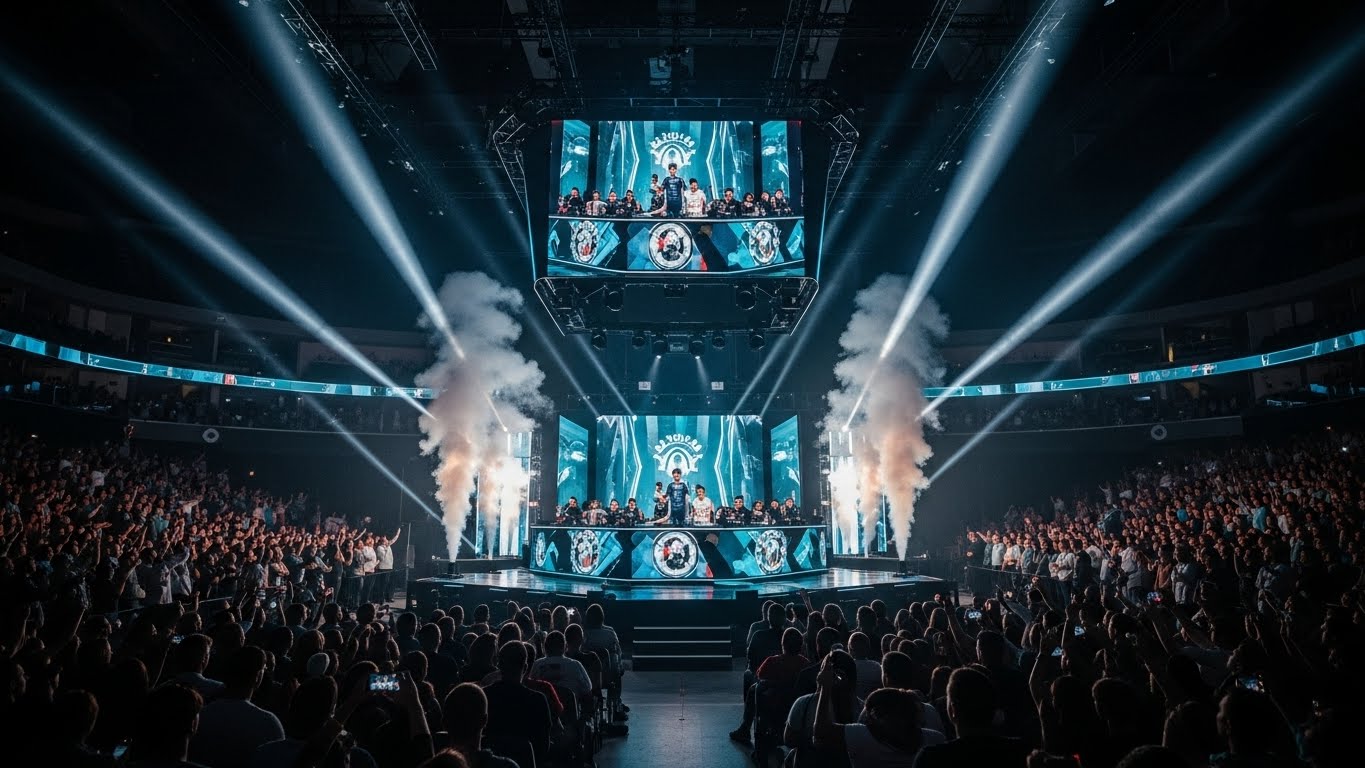
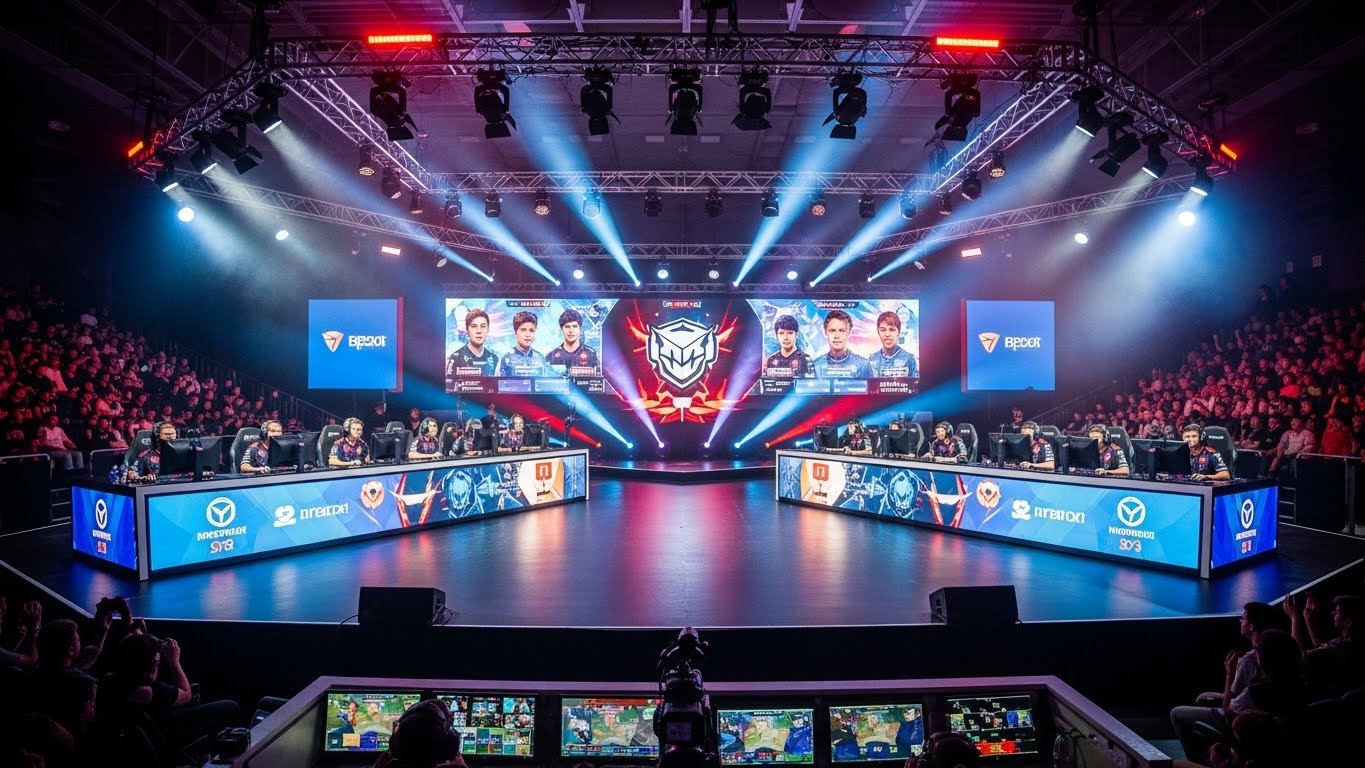
Over the last fifteen years, esports has transformed into a billion-dollar industry with professional teams, international tournaments, full-time players, and enormous prize pools. One of the most defining aspects of modern esports is the scale and polish of its presentation. Stadiums have sold out for events like the League of Legends World Championship or The International for Dota 2. These events feature cinematic openings, live musical performances, expert commentators, and in-depth pre-game analysis.
Revenue streams in esports come from multiple sources. These include tournament prize pools, streaming platform partnerships, sponsorship deals, advertising, in-game purchases, and merchandise sales. Unlike traditional sports, where broadcasting rights and ticket sales dominate, esports finds its financial backbone in digital viewership and online community engagement.
What separates esports from other entertainment forms is its ability to connect players and audiences interactively. Fans don’t just watch—they engage through chat, donate, create memes, play the same games, and often directly interact with professional players via streams and social media.
Popular Game Genres in Esports
Esports is an umbrella term that includes multiple types of games. These games fall into different genres, each with its own mechanics, strategies, and fanbases.
First-person shooters like Counter-Strike, Valorant, and Call of Duty are some of the most intense and action-packed titles. They require precision, team coordination, and reflexes. These games are fast-paced, making them thrilling for both players and spectators.
Multiplayer online battle arena (MOBA) games like League of Legends and Dota 2 involve complex strategies, real-time decisions, and teamwork. With dozens of characters and thousands of potential item combinations, each match feels unique. These games have arguably some of the largest followings in esports due to their competitive depth.
Fighting games like Street Fighter, Tekken, and Super Smash Bros. offer one-on-one competition that focuses on timing, prediction, and skill execution. These games have strong grassroots communities and often feature open tournaments where newcomers can test their skills against seasoned professionals.
Battle royale games, including Fortnite and Apex Legends, have also entered the esports scene, offering large-scale free-for-all matches that combine survival, shooting, and building mechanics.
Sports simulation games like FIFA, NBA 2K, and Rocket League blend real-world sports and arcade mechanics, appealing to both traditional sports fans and gamers.
The Role of Streaming and Media Platforms
Streaming platforms such as Twitch, YouTube, and region-specific services have played a crucial role in the rise of esports. Unlike traditional sports that rely on television broadcasts, esports found a home on digital platforms that allowed anyone to watch live matches for free. These platforms not only offered streaming but also interaction. Viewers can chat in real time, donate to players, follow their favorite teams, and watch replays or highlight reels at their convenience.
Professional players often stream their practice sessions or casual games, creating a stronger bond with their fanbase. This content not only monetizes their personality but also allows aspiring players to learn from the best.
Streaming platforms are also responsible for creating celebrities in the esports world. Some players have millions of followers and are recognized globally, much like traditional athletes or movie stars.
Professional Teams and Players
Esports teams are now structured similarly to traditional sports organizations. They have managers, coaches, psychologists, and support staff. Some teams are owned by traditional sports clubs or media conglomerates. Players sign contracts, receive salaries, and live in team houses or training facilities to practice and scrim together.
A professional esports player’s career can begin as early as their teenage years. Due to the fast reaction times required, many players peak in their early twenties. Organizations invest in training, nutrition, physical fitness, and mental health to prolong careers and maximize performance.
The lifestyle of a pro gamer is not as glamorous as it may seem. It requires long hours of practice, strategic preparation, and constant analysis. Tournaments are mentally exhausting, and the pressure to perform consistently can lead to burnout. However, for many players, the love of competition and the thrill of the crowd makes it worth it.
Esports and Global Expansion
Esports is a truly global industry. While its origins are often associated with the United States, South Korea, and parts of Europe, it now spans the globe. South Korea was among the first nations to treat esports as a professional career, with government recognition and dedicated channels broadcasting matches.
In China, esports has become a mainstream cultural phenomenon. Government-backed initiatives support esports education, and mega-events attract millions of viewers. Mobile esports, in particular, has exploded in China and Southeast Asia due to the widespread use of smartphones.
In North America and Europe, franchise-based models have been adopted for games like Overwatch and Call of Duty, where teams represent cities much like traditional sports teams. This model has attracted investment from celebrities, athletes, and business magnates.
Africa and the Middle East are emerging regions in esports. Internet infrastructure and accessibility continue to improve, allowing local talent to compete on the world stage. Tournaments in these regions are becoming more common, and communities are growing rapidly.
The Academic and Educational Integration
Esports is not just an industry—it’s becoming part of academic systems. Many universities now offer esports scholarships, varsity teams, and dedicated programs in esports management, game design, and digital media. High schools and middle schools are also integrating esports clubs and afterschool programs to engage students in teamwork and digital literacy.
These programs not only teach gaming skills but also encourage critical thinking, communication, leadership, and time management. In some cases, esports has become a pathway to college admission and careers in tech, journalism, marketing, and event production.
Psychological and Physical Demands of Esports
While it may not require running laps or lifting weights, competitive gaming is physically and mentally demanding. Professional players train for up to ten hours a day, maintaining precise motor skills, concentration, and strategic thinking. Many suffer from repetitive strain injuries, poor posture, and vision problems if not properly managed.
Mental health is also a growing concern in esports. The pressure to perform, frequent travel, public criticism, and the volatile nature of contracts can lead to stress and burnout. Organizations now invest in player wellness programs, hiring psychologists, physical therapists, and sleep consultants to keep players balanced and healthy.
Proper sleep, exercise, diet, and mental breaks are essential components of a successful career in esports, even if many in the audience don’t see it.
Esports and the Mainstream Media
Traditional media has taken notice of esports. Major networks have broadcasted esports events, and mainstream publications now report on player transfers, tournament results, and industry trends. Documentaries, biopics, and reality shows centered around esports have emerged, portraying the lives and challenges of pro players.
The line between entertainment and competition is increasingly blurred. Just as audiences love watching athletes for their performance and personality, esports players are now media figures. Some become influencers, brand ambassadors, or crossover stars in music, fashion, and film.
Esports has also entered the political sphere. Government recognition, debates over internet regulation, and discussions about youth screen time often involve esports. Countries like South Korea and China have enacted rules to balance gaming with education, while others have embraced esports as a tool for digital development.
Esports in the Future: Where Are We Headed?
As technology evolves, so too will esports. The integration of virtual reality and augmented reality could lead to new formats and ways of playing. Artificial intelligence may be used to improve training, analyze opponents, and create smarter in-game tools.