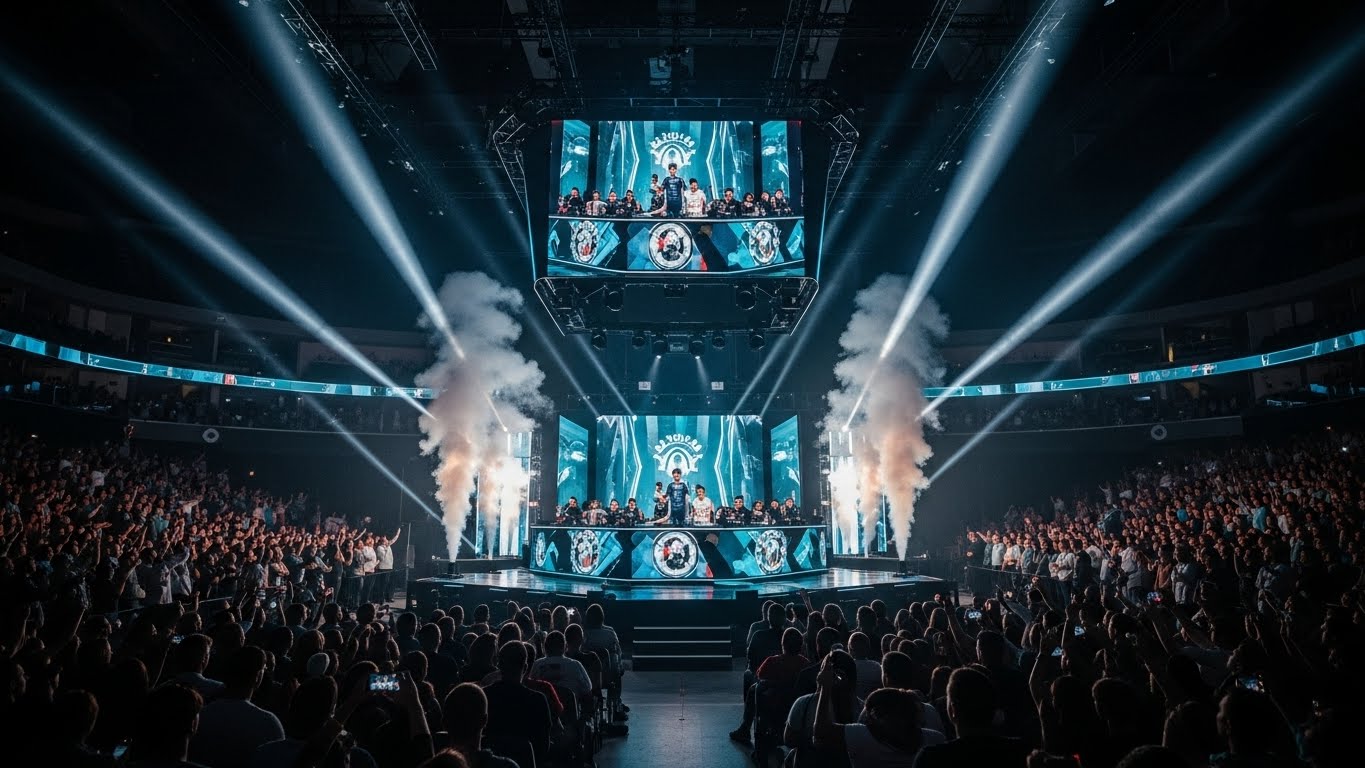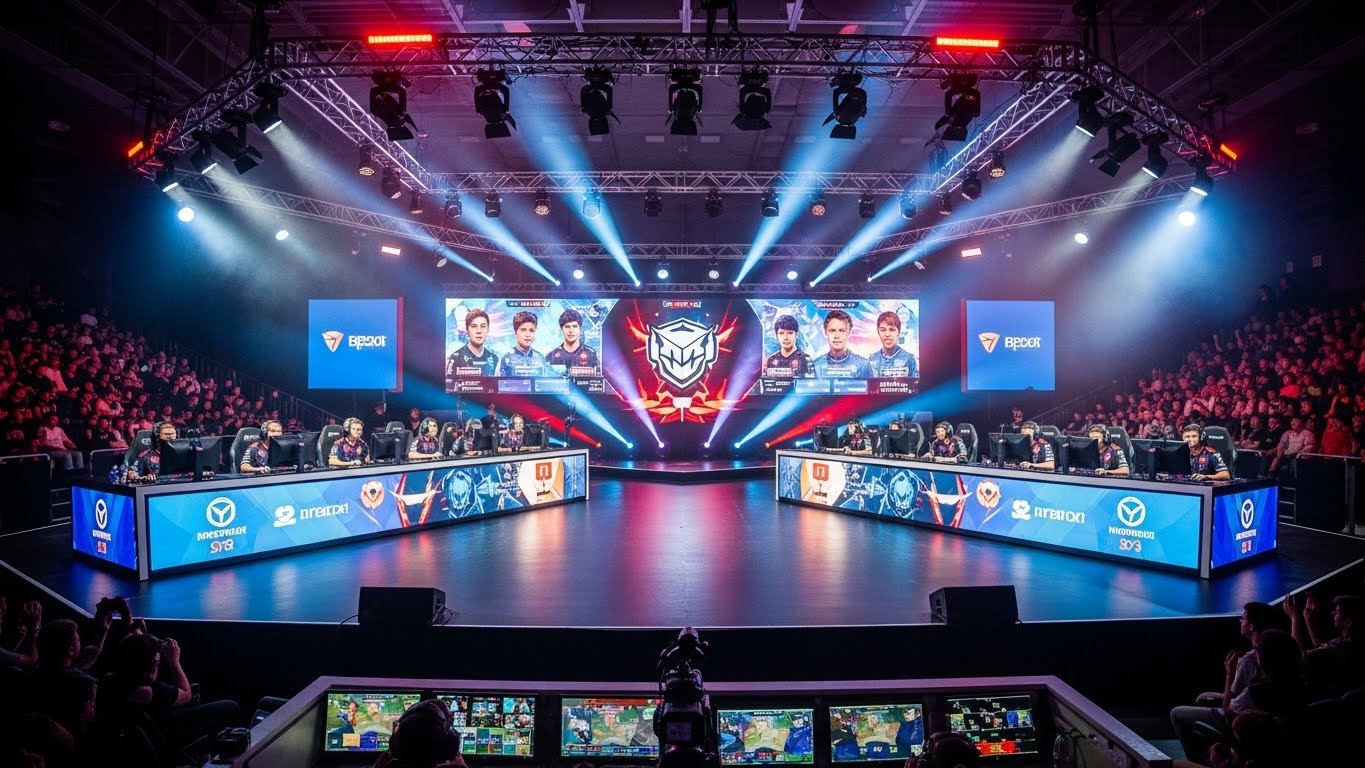
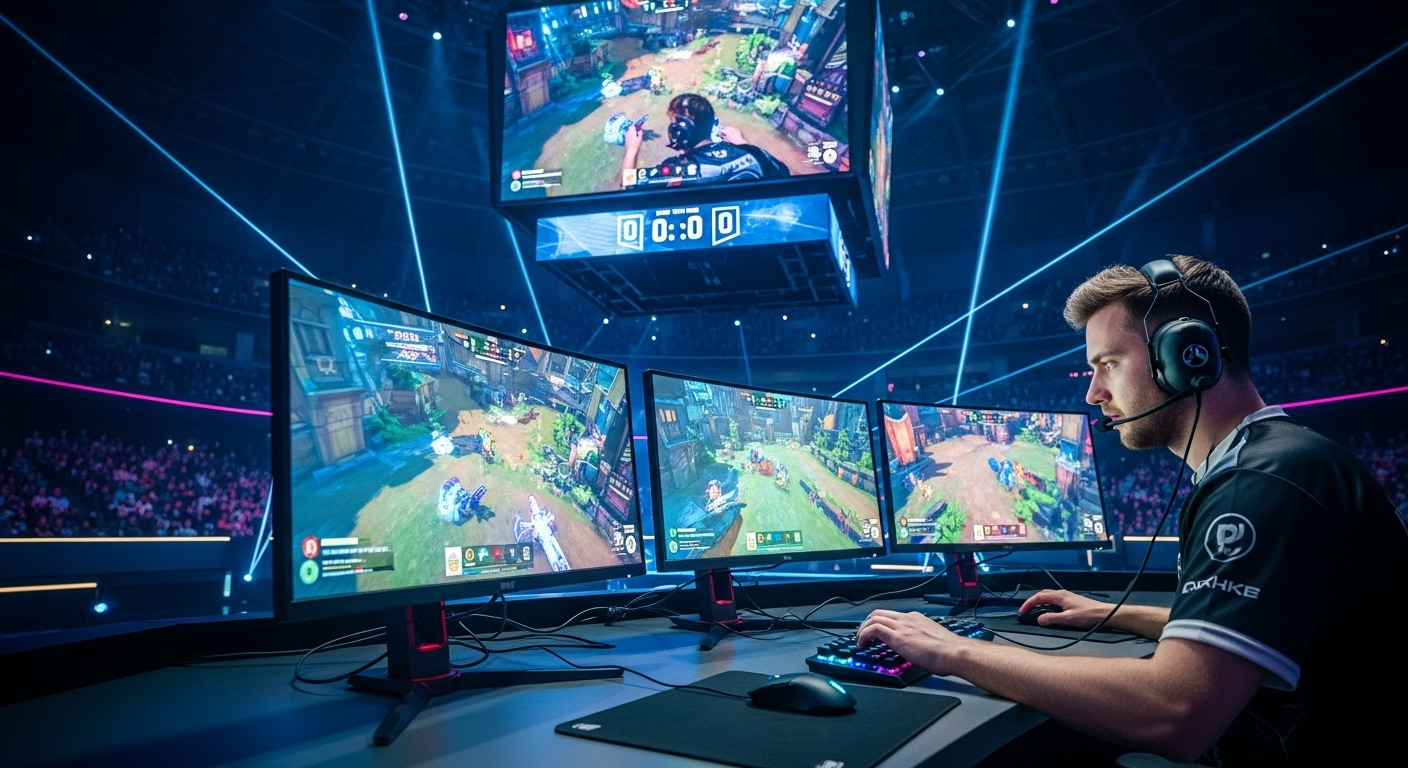
In recent years, esports has evolved from a niche activity to a global entertainment phenomenon. With millions of viewers tuning into tournaments, professional players raking in substantial earnings, and major corporations investing in the industry, esports has firmly positioned itself as a key player in the entertainment landscape. In this post, we’ll explore how esports has transformed from a hobby to a full-blown industry, the forces driving its growth, and the future that awaits competitive gaming.
The Early Beginnings of Esports
Esports didn’t emerge overnight. Its origins can be traced back to the early days of competitive gaming. The late 1990s and early 2000s saw the birth of gaming tournaments, with games like StarCraft and Quake paving the way for competitive play. Early events were largely small-scale, localized competitions, often held at LAN parties or conventions. Despite its humble beginnings, the thrill of competition and the community spirit within the gaming world kept the competitive scene alive.
The real breakthrough came in the mid-2000s with the rise of broadband internet and the advent of online multiplayer games. Titles like Counter-Strike, Warcraft III, and League of Legends enabled players to face off against each other from different corners of the world, setting the stage for the explosion of esports.
The Emergence of Professional Esports
What once started as an underground subculture began to gain mainstream attention in the early 2010s. This was when esports truly went professional, with the establishment of dedicated esports organizations and teams. Games like League of Legends and Dota 2 became household names, offering massive prize pools, streaming platforms for live broadcasting, and large-scale tournaments that attracted thousands of spectators, both in person and online.
Organizations like Team Liquid, Cloud9, and Fnatic were among the first to build global brands and establish player rosters that were as well-known as traditional sports teams. As the audience for esports expanded, so too did the opportunities for players and coaches to build professional careers. This shift marked the start of esports becoming not just a hobby but a full-fledged industry.
The Role of Streaming and Digital Platforms
One of the driving forces behind the rise of esports has been the boom of online streaming platforms. Twitch, YouTube Gaming, and Facebook Gaming have revolutionized the way fans engage with esports. Instead of being limited to watching tournaments on TV or in person, fans can now watch their favorite players compete from the comfort of their own homes, engaging with them in real time through live chat features.
The accessibility and interactivity of these platforms have been a game-changer for esports. Not only can fans tune in to high-level competitions, but they can also interact with streamers during practice sessions, watch casual games, and even support players through donations and subscriptions. This has created a vibrant, thriving community that extends far beyond the tournament stage.
Esports as a Career: Players, Coaches, and Analysts
Esports has come a long way in terms of player development and career opportunities. Professional esports athletes today train and compete just like traditional sports athletes. They spend hours perfecting their skills, strategizing with their teams, and analyzing opponents to stay competitive in an ever-evolving landscape. Training regimens, nutrition plans, and even mental health support are now part of the esports professional’s routine.
In addition to players, there is a growing ecosystem around competitive gaming that includes coaches, analysts, broadcasters, and even psychologists. Teams now have full rosters of professionals, each contributing to the overall success of the group. Coaches provide strategic insights, while analysts break down gameplay to identify trends and weaknesses. This level of professionalism has been critical in elevating esports to the level of other competitive sports.
The Global Impact of Esports
Esports isn’t just a North American or European phenomenon—it’s a global movement. While cities like Los Angeles, Seoul, and Berlin have emerged as esports hubs, the competitive gaming community spans across continents. Asia, in particular, has played a significant role in shaping the landscape of esports, with countries like South Korea, China, and Japan producing some of the most successful esports teams and players.
Esports has also bridged the gap between cultures. Unlike traditional sports that often have geographical boundaries, esports allows players from all over the world to compete in the same tournaments, creating a unique cross-cultural experience. International events such as The International (Dota 2) and the League of Legends World Championship attract massive global audiences and showcase the diversity of talent and fan support from every corner of the planet.
The Future of Esports: Expanding Horizons
Looking to the future, esports shows no signs of slowing down. One of the most exciting developments is the growing interest from traditional sports organizations and major corporations. Teams from the NFL, NBA, and other leagues have begun investing in esports, either through sponsorships or by creating their own esports franchises. This convergence of traditional and digital sports is helping to bring esports into the mainstream, attracting a broader audience and legitimizing competitive gaming as a viable career path.
Moreover, the rise of mobile gaming is opening up new avenues for esports. With the proliferation of smartphones, games like PUBG Mobile and Free Fire have introduced competitive gaming to a wider audience, particularly in regions like Southeast Asia and Latin America. Mobile esports is expected to grow rapidly, and it may even outpace traditional PC and console esports in the coming years.
Technological advancements also promise to reshape the future of esports. Virtual reality (VR) and augmented reality (AR) could introduce new ways of playing and spectating, allowing for immersive experiences that bring fans even closer to the action. The idea of esports being included in the Olympic Games has also been discussed, marking another milestone in the integration of esports into mainstream entertainment.
The Cultural Influence of Esports
Esports has not only transformed the gaming landscape but also left a significant cultural impact. It has reshaped how we view video games, moving them from a casual pastime to a respected form of entertainment. The personalities of esports players have become cultural icons, with influencers like Ninja and Shroud reaching millions of fans through social media, streaming, and public appearances. Esports has even made its way into movies, television shows, and music, highlighting how it has become an integral part of popular culture.
Additionally, esports has opened up new educational and career pathways. Universities around the world now offer scholarships for aspiring esports players, and some institutions have developed formal programs in esports management, production, and game design. This further solidifies the industry as a serious career option for those interested in the intersection of gaming, technology, and entertainment.
Conclusion
Esports is more than just a game—it’s a cultural and economic force that continues to redefine the world of entertainment. As it expands into new markets, attracts major investments, and produces more globally recognized events, esports is solidifying its place as a major industry on par with traditional sports. With a growing fanbase, dedicated professionals, and a future full of innovation, the esports revolution is just beginning.
Whether you’re a player, a fan, or simply someone curious about the world of competitive gaming, one thing is certain: esports is here to stay, and its impact will continue to shape the digital entertainment landscape for years to come.